E11 is the United Arab Emirates' principal coastal expressway — a continuous paved corridor linking the Omani border in the west to Ras Al Khaimah in the north. Known locally by many names (Sheikh Zayed Road in Dubai, Sheikh Maktoum Road in Abu Dhabi), E11 functions as the economic spine connecting ports, airports, and metropolitan centres.
Route overview
Starting from the Al Ghuwaifat border crossing with Saudi Arabia (where E11 connects to international routes), the highway passes through Sila, the Liwa approaches, and into Abu Dhabi emirate. It continues through the capital, crosses into Dubai at Jebel Ali, traverses Sharjah, Ajman, Umm Al Quwain, and terminates in Ras Al Khaimah near the northern mountains.
While the federal designation is E11, local names change by emirate. Navigation apps may display segment-specific names rather than the E11 label — verify route continuity when planning long-distance trips.
Major cities and exits
Key exit clusters serve Abu Dhabi city, Yas Island, Dubai Marina, Downtown Dubai, Sharjah city centre, and RAK. Service areas — including ADNOC and ENOC stations with food courts and prayer facilities — appear at regular intervals, though western desert sections require fuel planning.
Driving conditions by segment
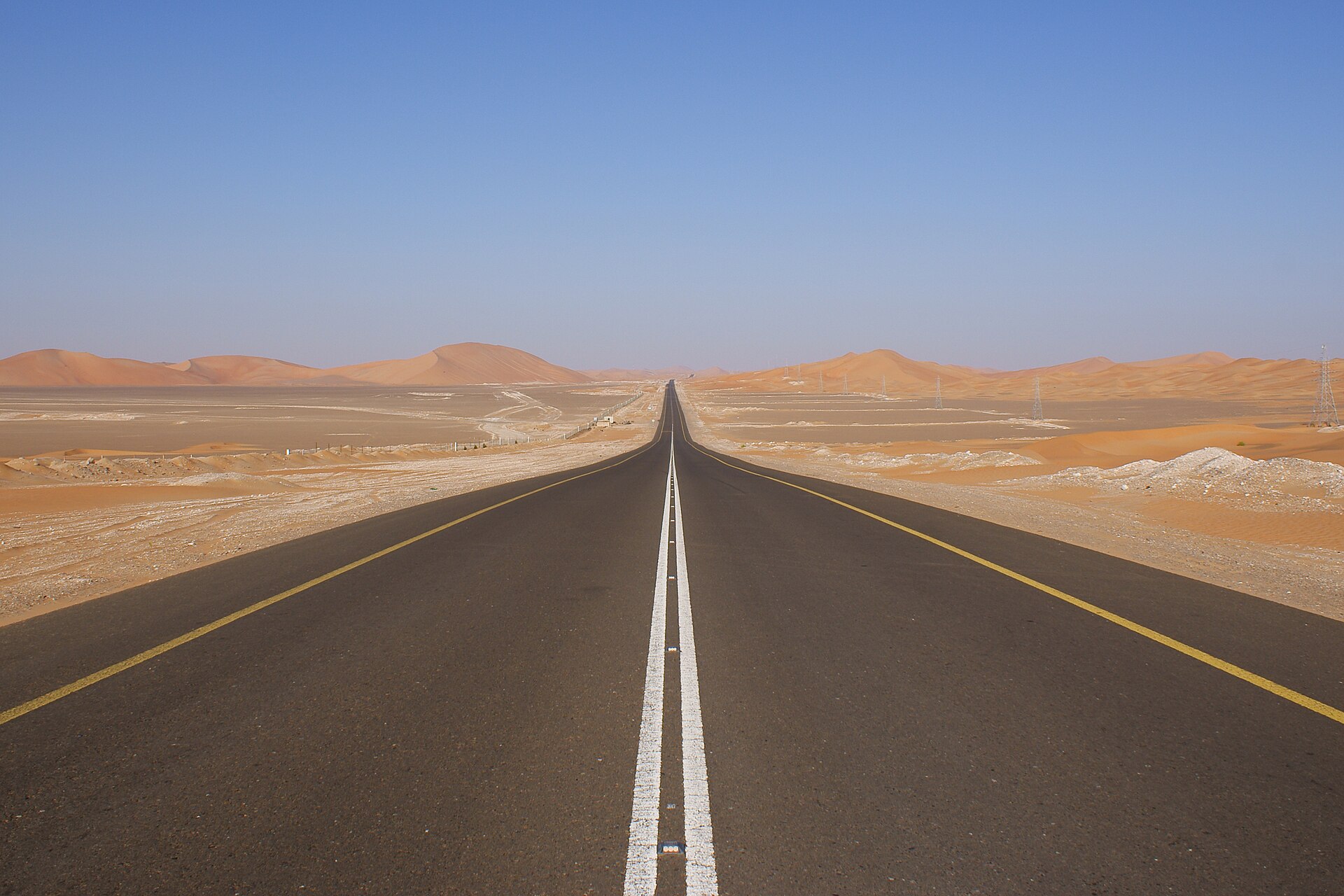
Abu Dhabi and Dubai urban segments are multi-lane with frequent interchanges. Western Al Dhafra sections feature long straight desert driving with occasional sand drift. Northern segments approach mountain foothills with gentler elevation changes. Speed limits generally range from 120 to 140 km/h on open highway.
Parallel and alternative routes
E311 runs inland as a partial alternative, particularly between Dubai and Abu Dhabi. E102 branches east from Sharjah toward Fujairah, leaving the E11 corridor. For coastal tourism, older E99 segments in Fujairah offer scenic alternatives with lower design speeds.
Freight and tourism impact
Jebel Ali Port feeds significant container truck traffic onto E11, especially overnight. Tourism buses and rental vehicles add seasonal volume during winter months. Ramadan and public holiday periods shift typical flow patterns with later morning peaks.
Practical driving tips
Carry sufficient water for desert segments. Check tyre pressure before long summer drives — heat increases blowout risk at sustained high speeds. Use sun visors and plan rest stops; fatigue-related incidents rise on monotonous western stretches. RT Online's traffic guides supplement E11 planning with congestion and speed zone detail for each metropolitan segment.
Historical development
E11's modern form emerged from phased federal investments beginning in the 1970s as oil revenues funded nationwide connectivity. Early segments linked Abu Dhabi to Dubai; northern extensions followed as Ras Al Khaimah and Fujairah integrated into the federation's transport grid. Each widening project reflected population forecasts that often materialised within a decade of completion.
Today E11 coexists with newer inland routes, yet it remains the default alignment for coastal logistics, intercity buses, and tourism coaches. Its continuity makes it the reference line for distance markers, emergency services staging, and national infrastructure planning documents published by federal authorities.